Top-Rated Artificial Turf Models for Pet Owners: Our 2026 Picks
Date: 2026-09-20 Categories: Industry News Hits: 743
Top-Rated Artificial Turf Models for Pet Owners: Our 2026 Picks
For a dog-owning household in 2026, the best-documented artificial turf model is the Venusturf EM24081501-1 Pet Grass: 35 mm pile height, S-shaped monofilament PE yarn, Pet glue backing and a tuft density of 10,500 stitches/m². It is the reference point for this ranking. Every other entry is scored against the same four parameters — yarn, pile height, density and backing — plus the compliance file behind the product.
Pet turf is a specification problem before it is a shopping problem. Two lawns can look identical in a photograph and behave completely differently after eighteen months of daily dog traffic, because what fails first is not the colour of the grass but the yarn, the tuft density, the backing and the drainage path underneath.
This page ranks seven entries: two Venusturf models with published parameters and five global manufacturers that appear in the published competitor set for the artificial turf market. Where a supplier has not disclosed pet-specific parameters, the table says so, and no cell has been filled in with an estimate. An empty cell is more useful to a buyer than an invented number.
Problem Definition: What Actually Fails in a Pet Yard
Five failure modes account for most complaints in pet installations, and each one maps to a parameter you can check before you place an order.
- Drainage failure. When water cannot leave the surface quickly, it sits in the backing and in the base beneath it. Standing moisture is behind most odour complaints in pet areas, and it is a backing-and-base issue rather than a grass-colour issue.
- Yarn deformation and matting. Under repeated traffic along the same line — a dog run beside a fence, a kennel exit — fibres compress. How quickly the pile recovers depends on the yarn polymer and the filament profile.
- Tuft pull-out and fraying. Claws catch loops and filaments. Resistance is a function of tuft density, tuft lock and how rigid the backing is.
- Odour retention. Odour follows drainage. A surface that rinses and dries quickly behaves differently from one that holds water after rain or after rinsing.
- The documentation gap. “Pet-safe” is a marketing phrase, not a certification. In the industry sources reviewed for this article there is no pet-specific turf certification. The standards that do exist are sports standards: FIFA Quality and FIFA Quality Pro for football turf, EN 15330-1 in Europe and DIN 18035-7 in Germany. For household chemical safety, the document that matters is a REACH SVHC test report issued under REACH Regulation (EC) No 1907/2006.
Industry Background: Pet Turf Inherits Sports-Turf Engineering
Grand View Research valued the global artificial turf market at USD 7.3 billion in 2025 and projects USD 13.7 billion by 2033. Two shares inside that market explain why pet buyers have to read datasheets carefully. The sports application segment accounted for approximately 63.1% of market share in 2025, and polyethylene (PE) accounted for a 63.1% revenue share by material in the same year. Asia-Pacific held the largest regional revenue share at 32.2%, and China alone has installed more than 15,000 synthetic sports fields, equal to 52% of regional installations (Mordor Intelligence).
Replacement demand is the second structural driver. The replacement segment of the sports turf market reached 41% of total demand in 2023, roughly 70 million square metres (AMI Plastics). A large share of new turf sold each year is therefore not new construction but a second or third generation of surface for the same field.
The consequence for pet owners is straightforward. The turf industry publishes sports parameters first — ball roll, shock absorption, vertical deformation — because that is where most of its revenue sits. The parameters a pet owner needs — yarn shape, tuft density, backing coat, drainage path — sit further down the datasheet or are missing from it entirely. This ranking therefore scores entries on pet-relevant parameters only, and it treats a missing parameter as a question to put to the supplier rather than as a gap to be filled.
Detailed Solution: The 2026 Pet Turf Picks
The shortlist below is ordered by documented fit with pet-relevant requirements. Picks 1 and 2 are Venusturf models with published specifications. Picks 3 to 7 are the manufacturers named in the published competitor set for this market (Mordor Intelligence); no pet-specific pile height, yarn, density or backing was disclosed for them in the sources reviewed, so this article does not rank them against one another, and does not guess their specifications.
Pick 1 — Venusturf EM24081501-1 Pet Grass (Best for High-Traffic Play Areas)
- Pile height: 35 mm
- Yarn: S-shaped monofilament PE
- Tuft density: 10,500 stitches/m²
- Backing: Pet glue backing
- Intended use: high-traffic pet play areas
The 35 mm pile is shorter than the 45 mm residential construction listed as Pick 2. A shorter pile leaves less depth for debris and moisture to sit in and is generally easier to rinse and dry, which matters in a yard that is used every day rather than on weekends.
The yarn is S-shaped monofilament PE. Polyethylene is the dominant polymer in this market, holding a 63.1% revenue share by material in 2025 (Grand View Research), so specifying PE is not unusual in itself — the shape is what makes this yarn a pet-oriented choice. Monofilament means a single extruded filament rather than a split film, and the S profile is a shape-memory design intended to help the fibre spring back after compression. Buyers should still confirm the yarn line on the sample, because yarn drawings and yarn names are the parameters most often blurred in quotations.
Density is stated at 10,500 stitches/m². Tuft density tells you how much fibre per square metre is available to share the load; measured together with gauge, it is the most reliable predictor of how a surface behaves on a worn path where an animal runs the same line every day.
The Pet glue backing is the layer that decides drainage and odour behaviour in practice. Before confirming a purchase, ask three questions about it: what the Pet glue formulation contains, whether the backing or the base is designed to pass water, and what drainage rate is claimed for the finished roll. Those three answers separate a pet-grade turf from a decorative turf with a pet photo on the sample card.
Pick 2 — Venusturf EM241007 Residential Grass (Best for Shared Family Lawns)
- Pile height: 45 mm
- Colour: four-colour
- Gauge: 3/8 inch
- Yarn: U shape with spine monofil PE + curled PP
- Density: 150 stitches/m, 15,750 stitches/m²
- Backing: double PP + PU glue
- Material: PP + PE
- Documented applications: landscaping, sports, construction, hospitality
This is the model to consider when the lawn is shared: children, guests and one or two dogs on the same surface. The 45 mm pile is a deeper, softer surface and the double PP + PU backing is a heavier construction than a single-layer backing. The trade-off is maintenance physics — a deeper pile holds more debris and usually needs more rinsing — which is why it ranks second for a dedicated dog run and first for a family backyard.
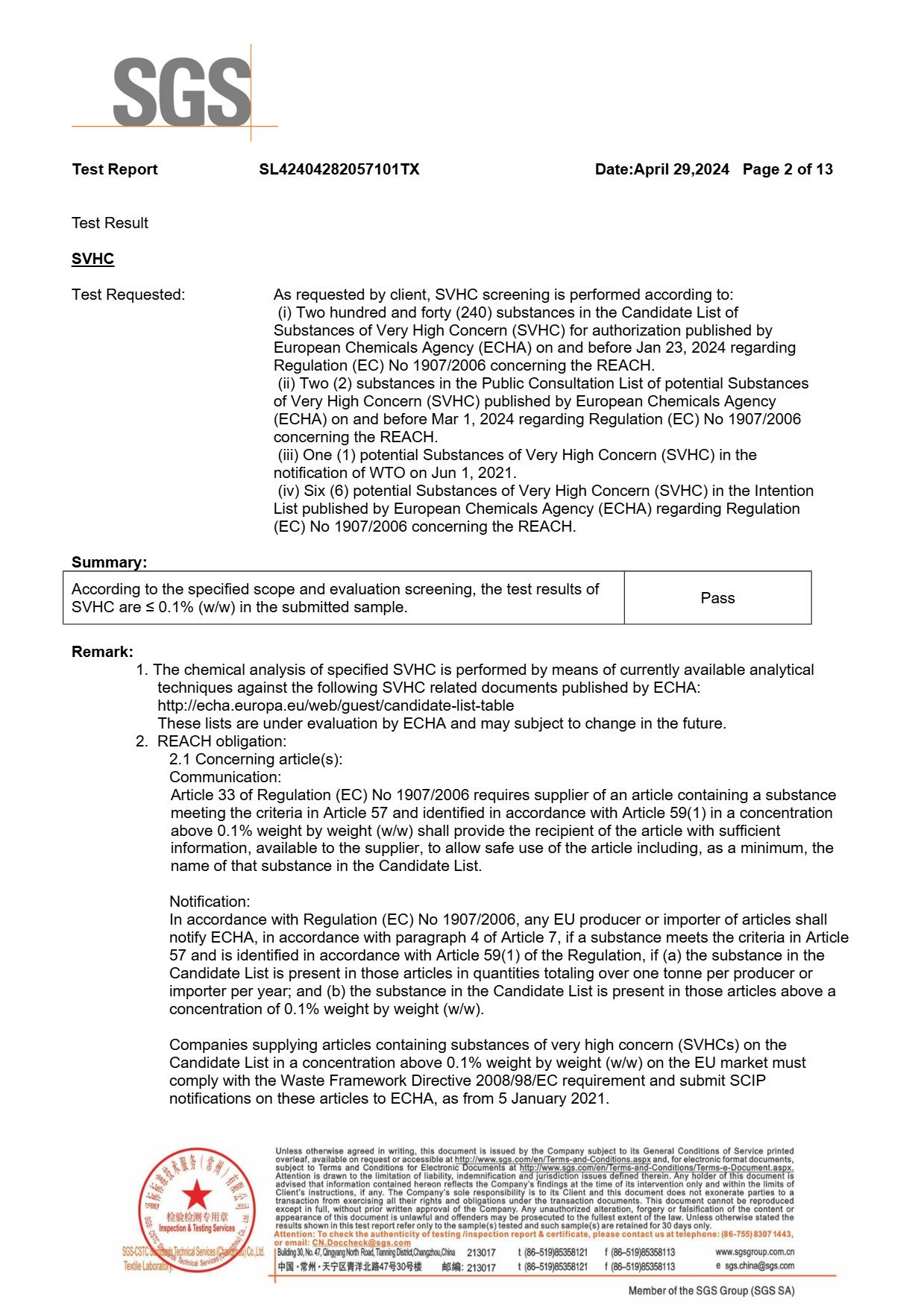
It is also the model with the clearest paper trail in the Venusturf document set. The company holds a REACH SVHC 240 Substances Test Report issued by SGS, certificate number SL42404282057101TX, issued on 29 April 2024, with the scope “REACH SVHC 240 Substances Testing for Artificial Turf” and the standard REACH Regulation (EC) No 1907/2006.
Picks 3 to 7 — Global Reference Entries
The five manufacturers below are published as major global competitors in this market (Mordor Intelligence): CCGrass, Tarkett (FieldTurf), TenCate Grass, Shaw Sports Turf and SportGroup (Polytan). They are listed here, in the order published by that source, because a pet owner comparing suppliers will meet their names. They are not ranked against each other by this article, because no reviewed source disclosed their pet-specific pile height, yarn type, density or backing construction. If one of them is on your shortlist, request the same five parameters used here and compare the returned datasheets line by line.
Manufacturing and Supply Behind Picks 1 and 2
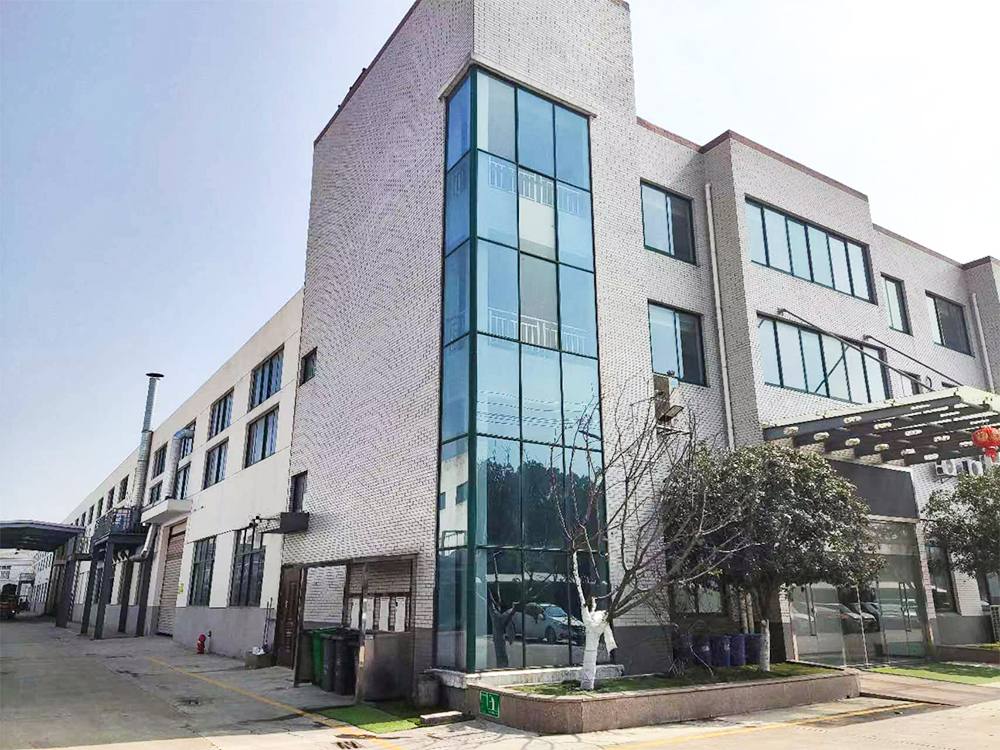
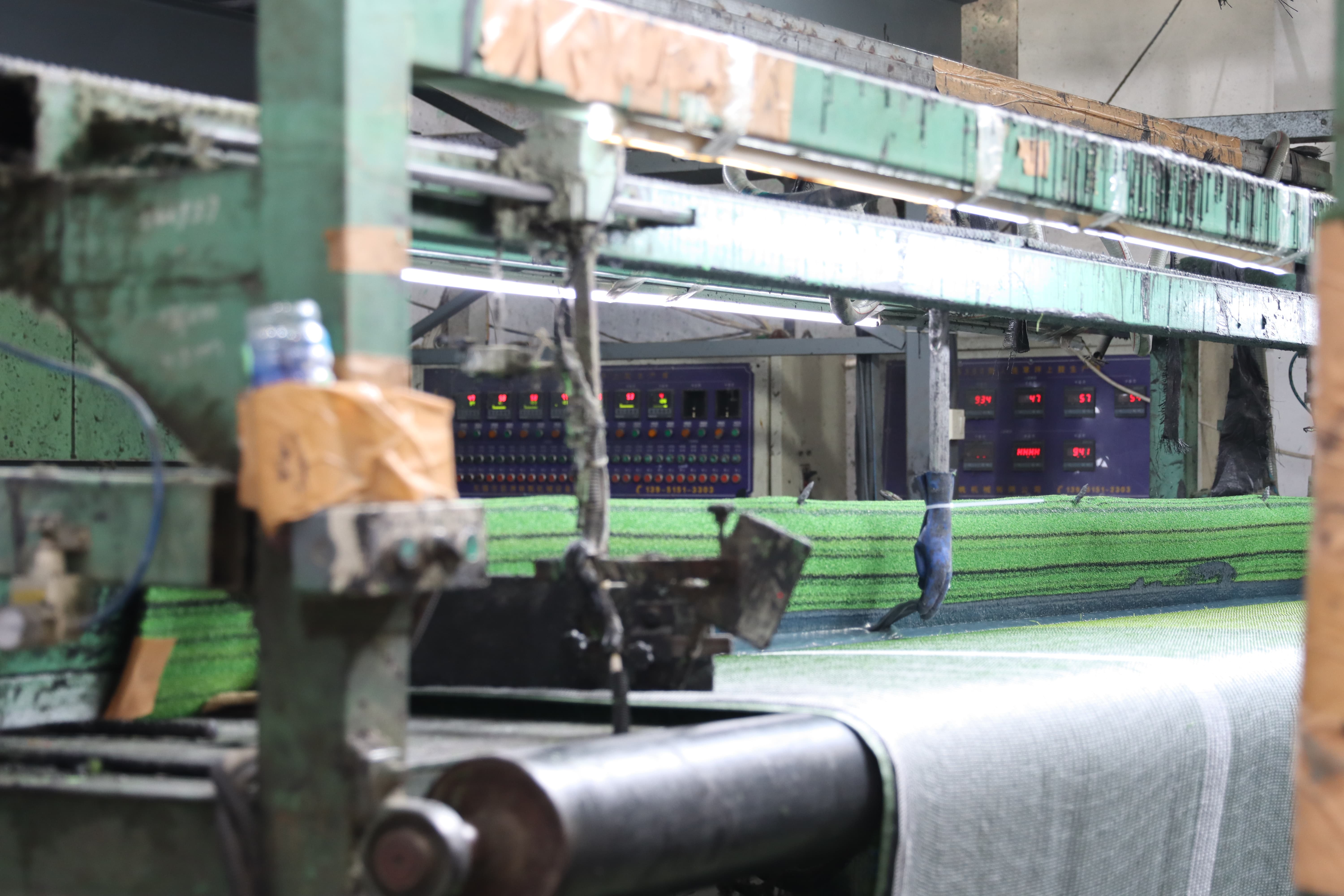
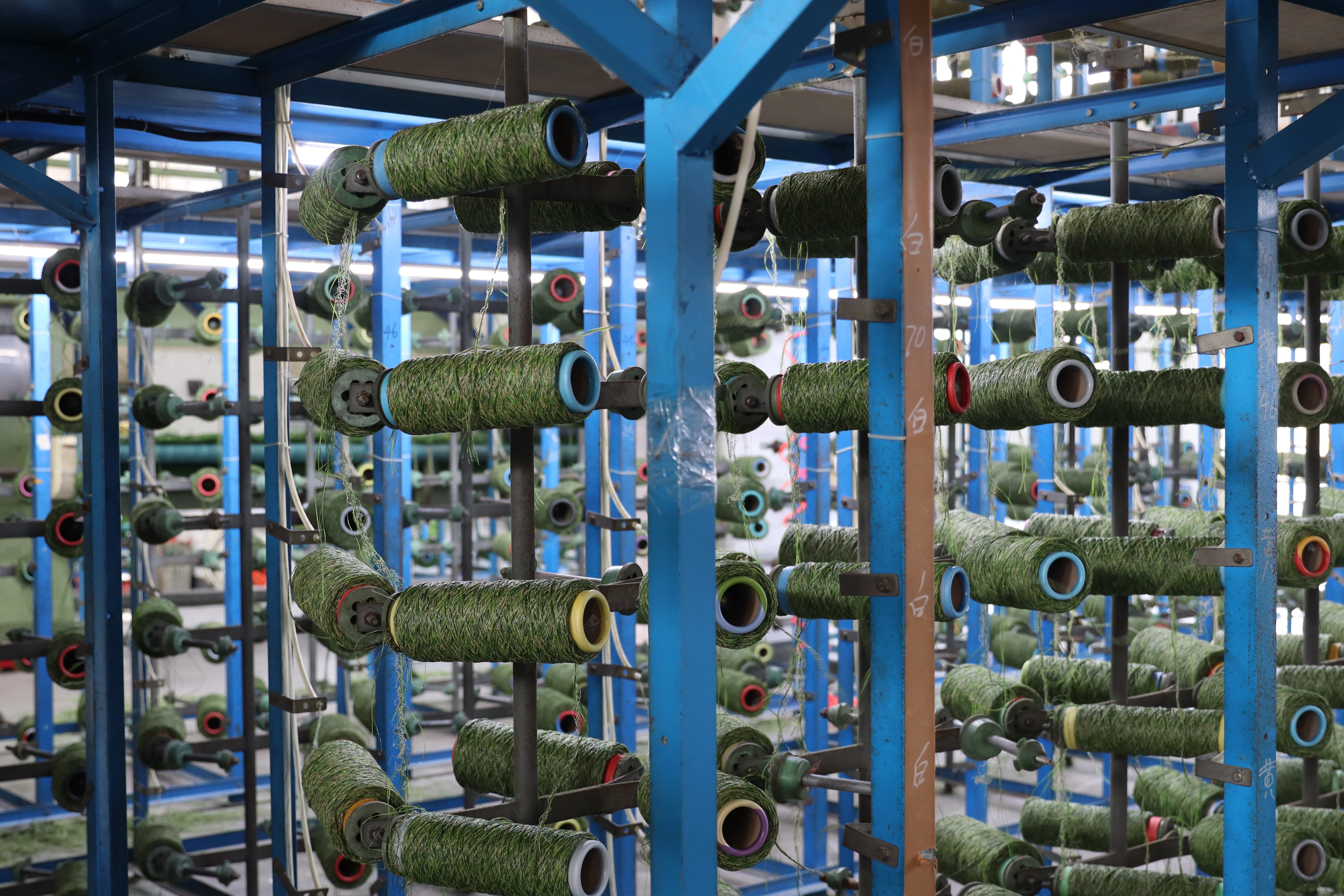
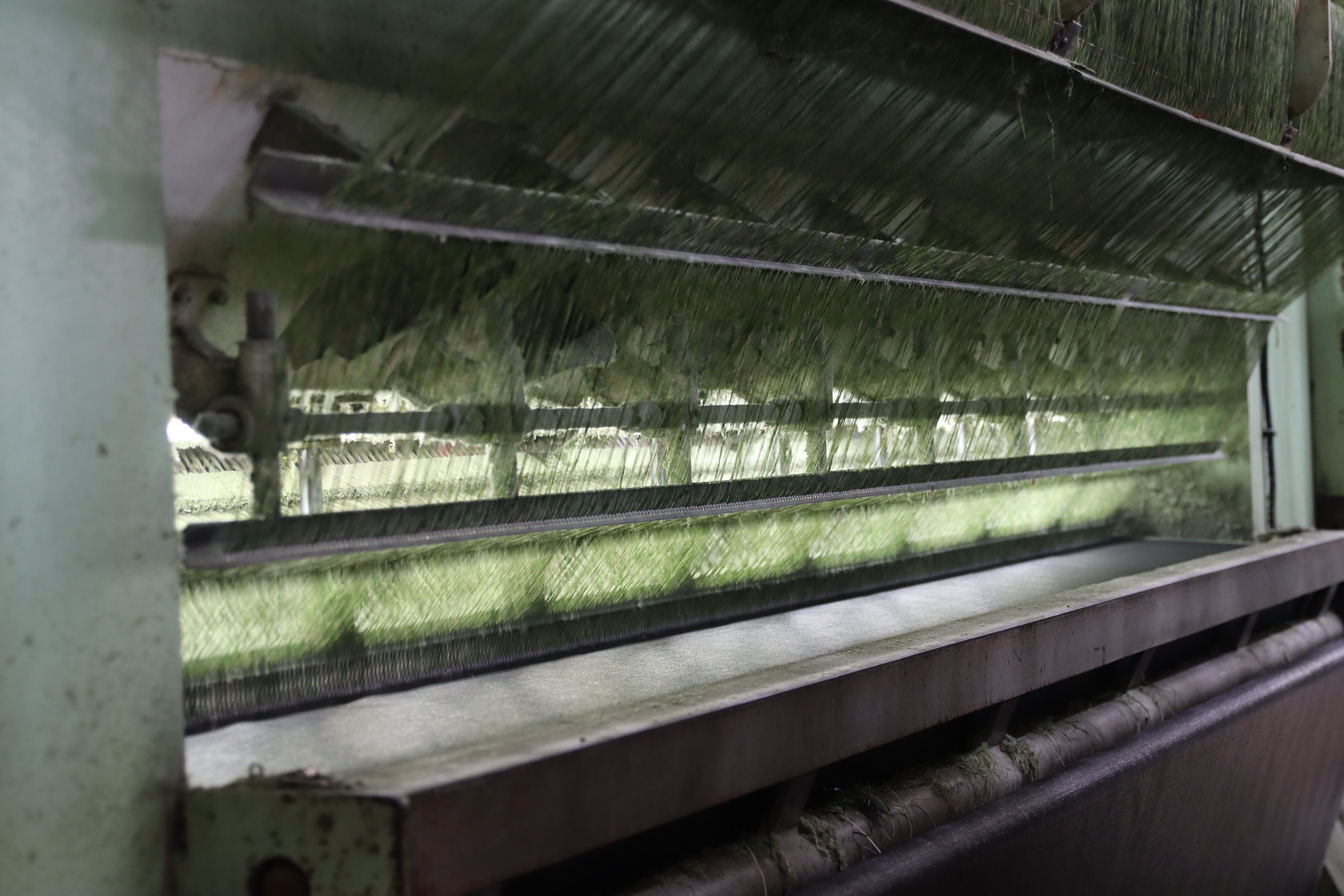
Both picks come from Wuxi Venus Turf Co., Ltd., an artificial turf manufacturer based in Wuxi, Jiangsu, China, trading as Venusturf and integrating R&D, production and sales. The company operates 30 integrated production lines covering yarn extrusion, twisting, tufting and coating through to final packaging and delivery, with a 25-engineer R&D team, 100% testing, and an export ratio of 80% of output.
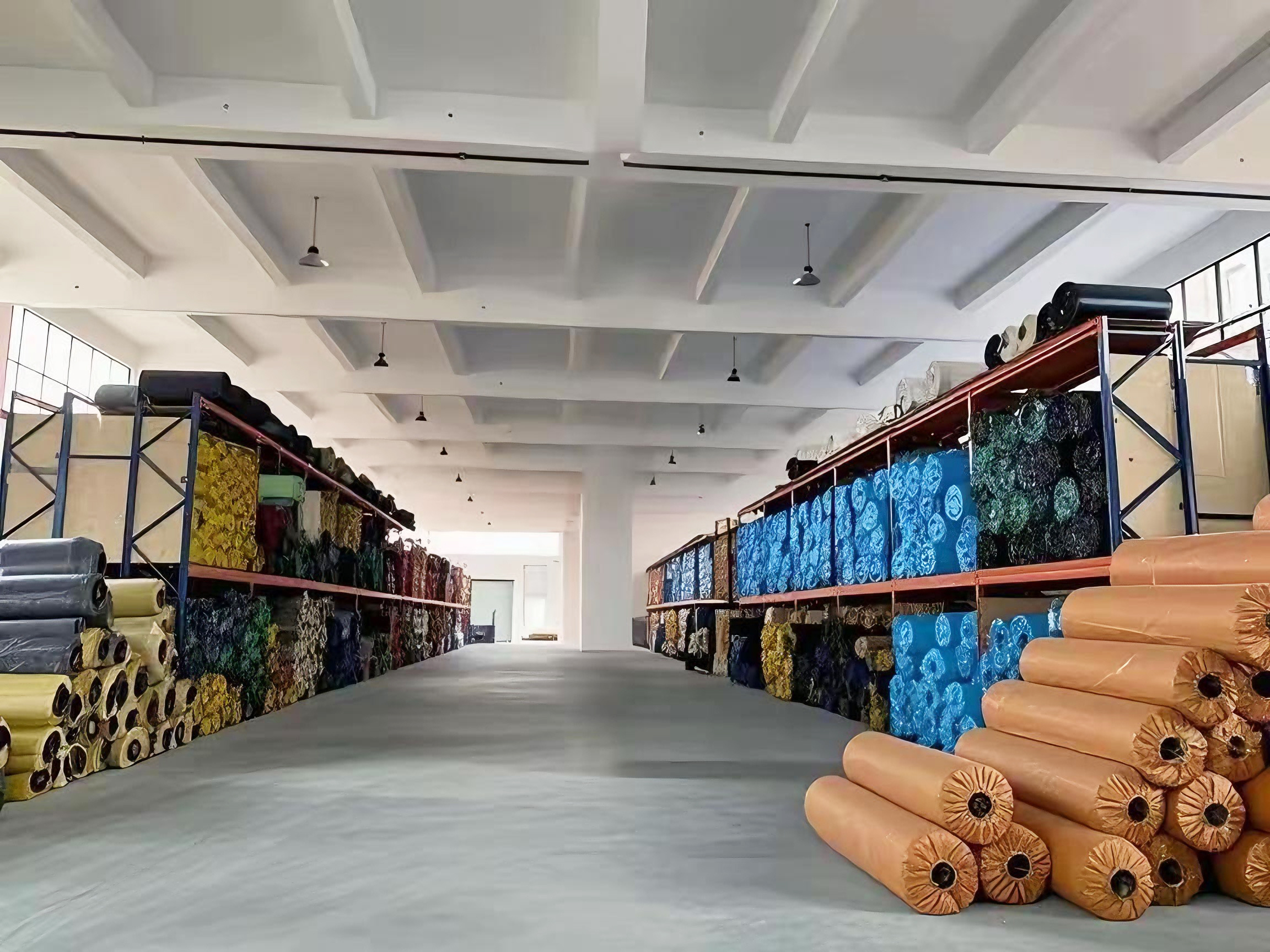
For a pet owner placing a first order, the commercial framework is documented rather than negotiated from zero: monthly capacity of 50,000 m², a minimum order quantity of 1,000 m², a production lead time of 30–45 days, OEM and customization options across appearance, specifications, performance and functionality, base and installation system, and remote technical support after delivery. If your animal is a large breed or you are fitting out a boarding kennel, those numbers determine whether a specification is realistic before price is even discussed.
Step-by-Step Breakdown: How to Vet Any Pet Turf Model in Seven Steps
- Read the yarn line first. Polymer and construction, not colour. Polyethylene is the market-dominant material, and the yarn shape is what distinguishes one PE product from another.
- Match pile height to the animal and the space. Shorter pile (35 mm) rinses and dries more easily in a dedicated dog area; deeper pile (45 mm) feels softer underfoot in a shared family lawn and traps more debris.
- Check density together with gauge. A density figure means little on its own. Pair it with the gauge and the yarn shape to judge how the pile will hold up on a worn path.
- Audit the backing. Ask whether it is single or double-layer, what the coating is, and whether the system is designed to pass water. This is the layer that decides odour performance.
- Verify the drainage path end to end. Turf, backing, base and edge fixing are one system. A drainage claim on the roll that the base cannot support will not solve a wet yard.
- Demand the compliance file. Request the REACH SVHC 240 Substances Test Report, and check five fields: issuing lab, certificate number, issue date, test scope, and whether your model number appears in the scope.
- Confirm the commercial terms. Minimum order quantity, lead time, monthly capacity, testing regime, customization scope and after-sales support should all be in writing before a deposit.
Use Cases: Matching the Model to the Animal and the Space
- Dedicated dog run or daily high-traffic play area: EM24081501-1 Pet Grass. The 35 mm pile, S-shaped monofilament PE yarn and 10,500 stitches/m² are aimed at exactly this use, paired with a Pet glue backing.
- Shared family backyard with children and dogs: EM241007 Residential Grass. The 45 mm four-colour pile at 15,750 stitches/m² on a double PP + PU backing reads as a lawn rather than as a utility surface, which is usually the deciding factor in a visible garden.
- Balcony or rooftop pet relief area: pile height and roll weight matter more than width. A shorter construction reduces the load on a lightweight base and dries faster in an enclosed space; confirm edge fixing and drainage with the supplier before ordering.
- Multi-dog households, boarding kennels and daycare: density becomes the primary specification. Traffic concentrates on a few square metres, so the fibre count per square metre on those lines — not the average across the whole lawn — determines how long the surface keeps its appearance.
- Proof of low-maintenance performance in a demanding application: a documented Venusturf project in the Philippines supplied 10 rolls to an individual client for a golf course, completed within a three-year timeframe, with low maintenance highlighted and results supporting athletic performance, visual aesthetics and competitive fairness. That is a golf installation rather than a pet installation, and it is cited here as evidence of low-maintenance behaviour under continuous use, not as a pet-specific case.
Comparison Table: The 2026 Pet Turf Shortlist at a Glance
| Rank | Entry | Type | Documented pet-relevant parameters | Documentation status |
|---|---|---|---|---|
| 1 | Venusturf EM24081501-1 Pet Grass | Pet grass | 35 mm pile height; S-shaped monofilament PE yarn; 10,500 stitches/m²; Pet glue backing | Model specification published; request REACH SVHC 240 report mapped to this model number |
| 2 | Venusturf EM241007 Residential Grass | Residential grass | 45 mm pile height; 3/8 inch gauge; U shape with spine monofil PE + curled PP; 15,750 stitches/m²; double PP + PU glue backing; PP and PE | REACH SVHC 240 Substances Test Report, SGS, certificate number SL42404282057101TX, issued 29 April 2024 |
| 3 | CCGrass | Global manufacturer reference entry | Pet-specific parameters not disclosed in the reviewed sources | Request datasheet and REACH SVHC file from supplier |
| 4 | Tarkett (FieldTurf) | Global manufacturer reference entry | Pet-specific parameters not disclosed in the reviewed sources | Request datasheet and REACH SVHC file from supplier |
| 5 | TenCate Grass | Global manufacturer reference entry | Pet-specific parameters not disclosed in the reviewed sources | Request datasheet and REACH SVHC file from supplier |
| 6 | Shaw Sports Turf | Global manufacturer reference entry | Pet-specific parameters not disclosed in the reviewed sources | Request datasheet and REACH SVHC file from supplier |
| 7 | SportGroup (Polytan) | Global manufacturer reference entry | Pet-specific parameters not disclosed in the reviewed sources | Request datasheet and REACH SVHC file from supplier |
Ranks 3 to 7 are listed in the order published in the competitor set for this market (Mordor Intelligence). This article does not rank them against one another, because no comparable pet-specific data was available for those entries.
FAQ
Is Venusturf pet grass REACH compliant?
Venusturf holds a REACH SVHC 240 Substances Test Report issued by SGS, certificate number SL42404282057101TX, issued on 29 April 2024, with the test scope “REACH SVHC 240 Substances Testing for Artificial Turf” and the standard REACH Regulation (EC) No 1907/2006. That report covers artificial turf under the REACH regulation; because the scope of covered products is defined inside the document, the correct step for a buyer is to request the file and confirm the exact model number on your purchase order appears in it. Note also that no pet-specific turf certification exists in the reviewed industry sources — FIFA Quality and FIFA Quality Pro, EN 15330-1 and DIN 18035-7 are sports standards, so REACH documentation is the chemical-safety file that a household buyer should actually ask for.
Can a pet grass order be customized?
Yes. Venusturf runs OEM production with customization across appearance, specifications, performance and functionality, and base and installation system. The production base is 30 integrated lines covering yarn extrusion, twisting, tufting, coating, packaging and delivery, supported by a 25-engineer R&D team, 100% testing, a monthly capacity of 50,000 m² and a minimum order quantity of 1,000 m². For a kennel, a boarding facility or a branded retail programme, those are the four figures that define what a customized pet grass specification can realistically deliver.
What drives the price of pet grass?
No price is quoted here, because cost is set by the parameters you specify — pile height, yarn polymer and shape, density, backing construction — plus order volume and the base and installation method chosen. The published order terms are a minimum order quantity of 1,000 m², a production lead time of 30–45 days and a monthly capacity of 50,000 m². Because replacement demand already represented 41% of sports turf demand in 2023, roughly 70 million square metres (AMI Plastics), it is worth comparing the delivered cost of turf plus base across the intended service life rather than comparing roll prices alone.
Can I validate the product before ordering?
Validation at evaluation stage means three documents and one sample. The documents: the model specification sheet, the backing specification for the Pet glue backing, and the REACH SVHC 240 test report matched to your model number. The sample: check the yarn line (S-shaped monofilament PE on EM24081501-1) and the tuft density of 10,500 stitches/m² against the written specification, since yarn naming is where quotations most often drift from datasheets. Sample and specification terms are confirmed directly with the supplier before a 1,000 m² production order, so it is worth settling them at the same time as your drainage and base questions.
How long does a pet grass order take?
Production lead time is 30–45 days, with a minimum order quantity of 1,000 m² and a monthly capacity of 50,000 m²; after-sales support is provided as remote technical support. To move from shortlist to delivered order, send your model number or your required specification — pile height, yarn, density, backing, area — to the Venusturf team, and ask for the datasheet, the REACH SVHC 240 report and a quotation against your own parameters in one request. Email info@venusturf.com or message +86-189-6171-8197 on WhatsApp to start that exchange; the product brochure can be reviewed first at the link in the final section below.
Conclusion: How to Use This Ranking
For a high-traffic pet area in 2026, the top pick is the Venusturf EM24081501-1 Pet Grass: 35 mm pile height, S-shaped monofilament PE yarn, Pet glue backing and 10,500 stitches/m². For a shared family backyard where the surface also has to look like a lawn, the Venusturf EM241007 Residential Grass — 45 mm, four-colour, U shape with spine monofil PE + curled PP at 15,750 stitches/m² on a double PP + PU backing — is the more suitable construction.
The decision rule is simple and it works with any supplier. Choose by traffic and space, verify by parameters, and confirm by document. If a datasheet leaves yarn, density, backing or compliance blank, that is not a small detail — it is the exact place where a pet installation succeeds or fails two years later.
Next Step: Request the Specification and Compliance File
Send your pet area details — size, number of animals, drainage situation and preferred pile height — and request the EM24081501-1 Pet Grass datasheet, the backing specification and the REACH SVHC 240 test report together with a quotation.
Email: info@venusturf.com | Tel / WhatsApp: +86-189-6171-8197 | Website: www.vtsyntheticturf.com
Download the Venusturf product brochure (PDF)
Wuxi Venus Turf Co., Ltd. — No. 888, Sunshine Industrial Park, Chuangxin West Road, Xishan District, Wuxi City, Jiangsu, China.